IELTS Writing Task 2 at IELTSBrains

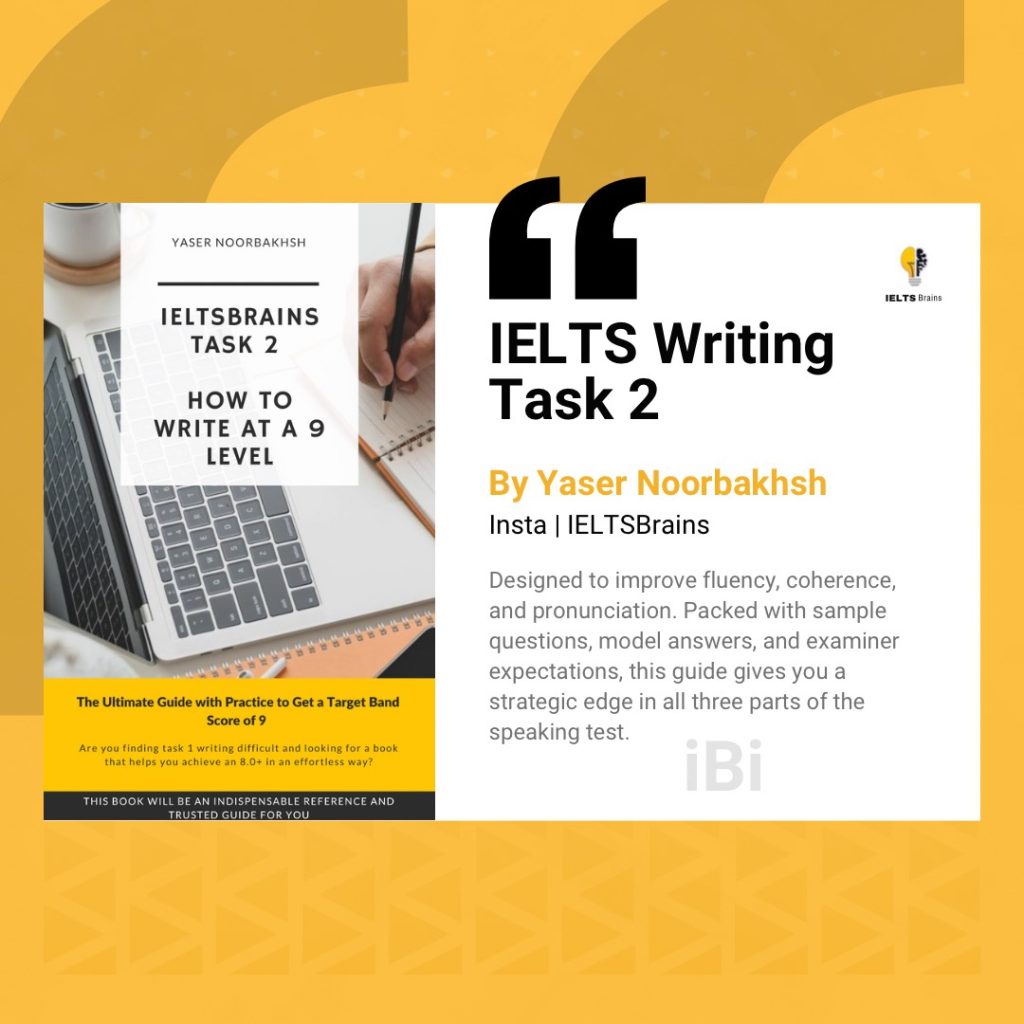
Mastering IELTS Writing Task 2 is essential for achieving your target band score. At IELTSBrains, we provide expert guidance, effective writing strategies, and high-quality practice materials to help you develop well-structured essays, improve your writing skills, and succeed in the IELTS exam.

Test Overview

IELTS Writing Task 2 is the second and most important writing component of both the IELTS Academic and General Training tests. Candidates are required to write an essay of at least 250 words in 40 minutes. This task contributes approximately two-thirds of your total Writing score, making it the most heavily weighted section of the Writing test.

The task assesses much more than grammar and vocabulary. Examiners evaluate your ability to analyse ideas, present logical arguments, organise information clearly, and communicate effectively using formal academic English.

Test Format

Time Allowed

40 minutes

Minimum Length

250 words

Task Type

Academic Essay

Weight

Approximately 66% of the overall Writing Band Score

What You May Be Asked To Do

Depending on the question type, you may need to:

  • Present your opinion
  • Discuss two opposing views
  • Evaluate advantages and disadvantages
  • Explain causes and effects
  • Suggest practical solutions
  • Analyse a social issue
  • Respond to two separate questions
IELTS Writing Task 2 Question Types Guide

Assessment Criteria

Your performance in IELTS Writing Task 2 is evaluated based on four official criteria:


1. Task Response:
Your ability to answer the question fully, present a clear position, develop relevant ideas, and support your arguments with appropriate explanations and examples.

2. Coherence and Cohesion:
The organization and logical progression of your ideas, including effective paragraphing and the appropriate use of cohesive devices to create a well-structured essay.

3. Lexical Resource:
The range, precision, and appropriateness of vocabulary used, including your ability to paraphrase effectively and use academic language naturally.

4. Grammatical Range and Accuracy:
The variety and accuracy of grammatical structures, demonstrating control over both simple and complex sentences with minimal errors.

Tips for Success

  • Understand the Question First: Carefully identify the essay type and make sure you answer every part of the question before you begin writing.
  • Plan Before You Write: Spend about five minutes organizing your ideas, choosing your position, and outlining your main arguments and supporting examples.
  • Develop Your Ideas Clearly: Each main paragraph should contain one central idea supported by logical explanations and relevant examples.
  • Stay Focused on the Task: Avoid memorized essays or irrelevant information. Every paragraph should directly address the essay question.
  • Use Natural Academic Vocabulary: Choose precise and appropriate vocabulary instead of using overly complex words that may lead to mistakes.
  • Write with Accuracy: Use a variety of sentence structures, but always prioritize grammatical accuracy over unnecessary complexity.
  • Manage Your Time Effectively: Allocate approximately 5 minutes for planning, 30 minutes for writing, and 5 minutes for reviewing and correcting your work.
  • Review Before Submitting: Check your essay for grammar, spelling, punctuation, word choice, and whether you have fully answered the question.
IELTS Brains - Writing Samples
Online Courses IELTSBrains
Self-Study Courses IELTSBrains
Offline Courses IELTSBrains
Students can access the Cambridge IELTS series, including PDFs and audio files, through reputable educational Channel weather on YouTube or Instagram.
Confidence doesn’t come from having the right words, it comes from knowing how to use them. Master your voice !

Learning Guide

Introduction

Although IELTS Writing Task 2 appears to be a straightforward essay-writing exercise, it is designed to assess a much broader range of academic and communication skills. Success depends not only on your English proficiency but also on your ability to analyse ideas critically, organise arguments logically, and communicate your position effectively under time pressure.

At IELTSBrains, we believe that high IELTS scores are achieved through strategic thinking rather than memorisation. This comprehensive guide combines international teaching standards with practical classroom experience to help learners develop the analytical and writing skills required for Band 7, Band 8, and Band 9 performance.


What is IELTS Writing Task 2?

Unlike Writing Task 1, IELTS Writing Task 2 requires candidates to analyse ideas, evaluate opinions, discuss issues, and construct well-supported arguments in a formal academic essay.

The examiner is not interested in whether your opinion is right or wrong. Instead, your performance is evaluated based on how effectively you respond to the question, organise your ideas, support your arguments, and demonstrate accurate and appropriate use of English.

Every successful IELTS essay is ultimately an exercise in critical thinking, logical organisation, and effective communication.
The Real Nature of IELTS Writing Task 2

Many students spend months memorising introductions, conclusions, or advanced vocabulary lists.

Unfortunately, this approach rarely leads to a high score.

Why?

Because IELTS is not testing memorisation.

IELTS measures your ability to think under pressure.

Imagine two students.

Student A memorises twenty model essays.

Student B learns how to analyse any question logically.

When an unfamiliar topic appears in the examination, Student B almost always performs better because they understand the thinking process behind effective essay writing.

This is exactly why IELTSBrains focuses on developing analytical thinking before writing skills.

Critical Thinking Before Writing

Before writing even a single sentence, ask yourself the following questions:

What exactly is the examiner asking?

Which part of the question must I answer?

Is the question asking for:

  • an opinion?
  • a discussion?
  • advantages?
  • disadvantages?
  • causes?
  • effects?
  • solutions?
  • evaluation?

What is my position?

What are my strongest arguments?

Which examples can support those arguments?

Candidates who answer these questions before writing usually produce essays that are more organised, coherent, and convincing.

Understanding the IELTS Assessment Criteria

Your essay is marked using four official criteria.

1. Task Response

This measures:

  • Did you answer the question completely?
  • Did you develop your ideas?
  • Did you support your arguments?
  • Did you remain focused?

Many candidates lose marks because they answer only half of the quetion.


2. Coherence and Cohesion

This measures how well your essay flows.

A high-scoring essay should feel natural and logical.

Ideas should connect smoothly using:

  • logical paragraphs
  • clear progression
  • appropriate linking devices

Good writing is easy to follow.


3. Lexical Resource

This criterion evaluates vocabulary.

Band 8 and Band 9 candidates:

  • use precise vocabulary,
  • avoid unnecessary repetition,
  • choose natural academic expressions,
  • and demonstrate flexibility.

Remember:

Using difficult words does not automatically increase your score.

Using appropriate words does.


4. Grammatical Range and Accuracy

Grammar should be both varied and accurate.

High-scoring essays include:

  • complex sentences,
  • conditional structures,
  • passive voice,
  • relative clauses,
  • participle clauses,
  • accurate punctuation.

Accuracy is always more important than complexity.

The Band 9 Essay Structure

One of the biggest misconceptions about IELTS Writing Task 2 is that there are many different essay structures.

In reality, almost every Band 9 essay follows the same logical framework.

Paragraph 1

Introduction

Purpose:

  • Introduce the topic.
  • Paraphrase the question.
  • Present your thesis statement.

Paragraph 2

First Main Idea

Purpose:

Present your strongest argument.

Support it with:

  • explanation
  • example
  • consequence

Paragraph 3

Second Main Idea

Purpose:

Develop another major argument.

Again include:

  • explanation
  • evidence
  • example

Paragraph 4

Conclusion

Purpose:

Summarise your position.

Never introduce new ideas here.

Planning Before Writing

Many students believe planning wastes time.

Actually, planning saves time.

Spend approximately five minutes planning your essay.

Your plan should include:

Topic

Question Type

Position

Main Idea 1

Main Idea 2

Examples

Conclusion

A good five-minute plan usually results in a much stronger essay.

IELTS Writing Task 2 Question Types: A Critical Thinking Approach

Understanding IELTS Writing Task 2 question types is not only about recognising keywords. High-scoring candidates need to understand the purpose of each question and identify what type of thinking the examiner expects.


Many students memorise essay structures without understanding the differences between question types. However, achieving Band 8 and Band 9 in IELTS Writing Task 2 requires deeper analysis, logical evaluation, and well-developed arguments.

The main IELTS Writing Task 2 essay types include:

  • Opinion Essays
  • Agree/Disagree Essays
  • Discussion Essays
  • Advantages and Disadvantages Essays
  • Problem and Solution Essays
  • Two-Part Questions
  • Cause and Effect Essays
  • Positive or Negative Development Essays

1. Opinion Essays (Personal Evaluation)

Understanding Opinion Questions

Opinion questions require candidates to evaluate an idea, situation, or statement and present their own perspective.

Unlike simple Agree/Disagree essays, Opinion Essays often allow more flexibility. Candidates can provide a balanced judgement, consider different factors, and develop a more nuanced position.

The examiner evaluates:

  • Personal evaluation
  • Quality of reasoning
  • Ability to analyse different perspectives
  • Justification of ideas

Common Opinion Essay Prompts

Examples:

  • What is your opinion?
  • What do you think about this?
  • Do you think this is a positive change?
  • To what extent do you think this is true?

Critical Thinking Approach

Before writing, do not only ask:

“Do I agree with this idea?”

Instead, analyse:

  • Is this approach effective?
  • Who benefits from it?
  • What are its limitations?
  • Under what conditions can it succeed?

A strong opinion is based on logical judgement, not personal feelings.


Recommended Structure

Introduction

  • Paraphrase the topic.
  • Clearly introduce your viewpoint.

Body Paragraph 1

  • Main argument.
  • Explanation.
  • Example.

Body Paragraph 2

  • Second argument.
  • Explanation.
  • Example.

Conclusion

  • Restate your final judgement.

2. Agree/Disagree Essays (Position-Based Essays)

Understanding Agree/Disagree Questions

Agree/Disagree essays present a specific statement and ask candidates to clearly establish their position.

The most common question format is:

“To what extent do you agree or disagree?”

Candidates must decide whether they:

  • Fully agree
  • Partly agree
  • Fully disagree

Unlike Opinion Essays, these questions require a clear response to a specific claim.


Common Agree/Disagree Prompts

Examples:

  • To what extent do you agree or disagree?
  • Do you agree or disagree with this statement?
  • How far do you agree or disagree?

Critical Thinking Framework

Analyse the statement:

Is this completely true?

→ Fully agree approach

Is it true only in certain situations?

→ Partial agreement approach

Is the statement incorrect?

→ Disagree approach


Common Mistakes

 Writing a discussion essay instead of defending a position.

 Giving a clear opinion in the introduction but changing position later.

 Presenting ideas that do not support your viewpoint.

These materials are invaluable for familiarizing students with the test structure and question types. 

How IELTSBrains Can Utilize Cambridge Materials

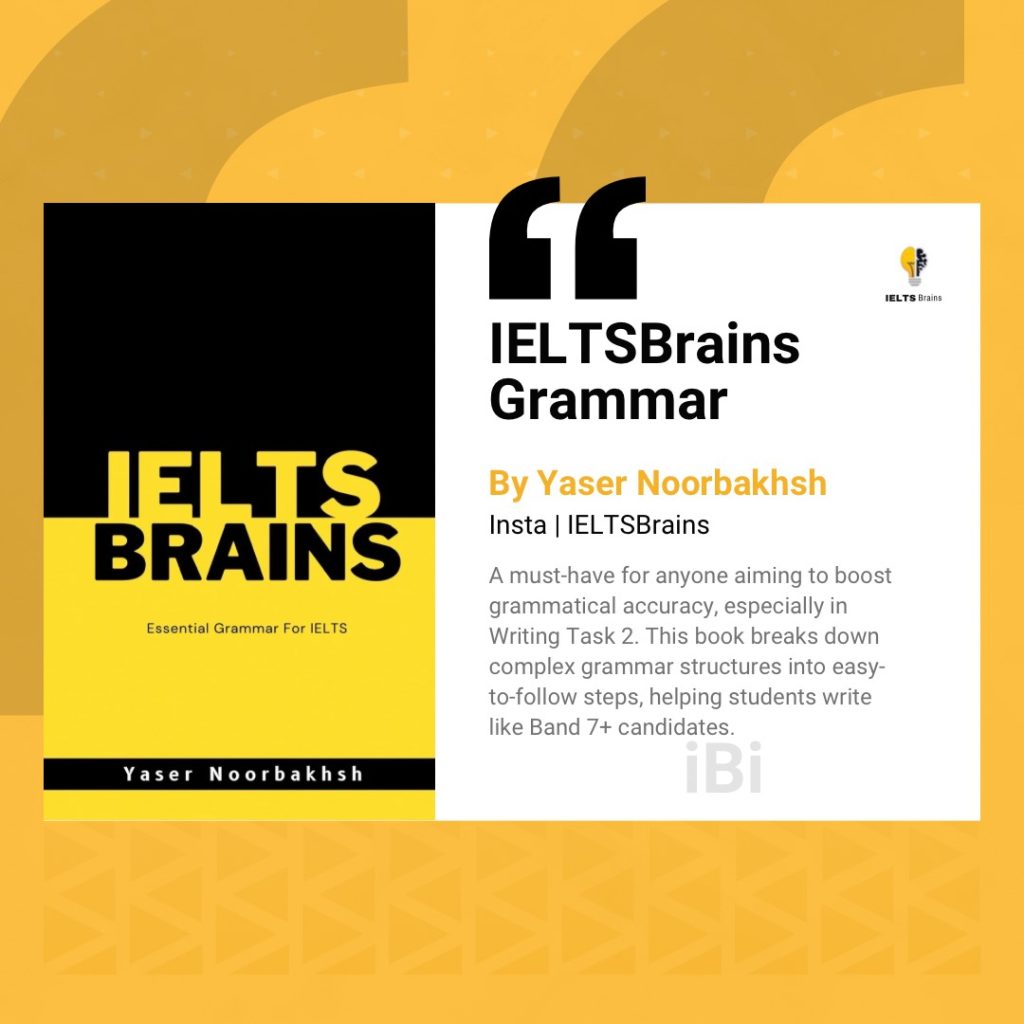
IELTS Brains - Yaser Noorbakhsh

By integrating the Cambridge IELTS series into the IELTSBrains curriculum, students gain exposure to authentic test materials, enhancing their readiness and confidence for the actual exam.

3. Discussion Essays (Discuss Both Views and Give Your Opinion)

Understanding Discussion Essays

Discussion Essays require candidates to analyse two different perspectives before presenting their own opinion.

The key skill tested is the ability to:

  • Understand different viewpoints.
  • Explain arguments objectively.
  • Evaluate both sides.
  • Provide a justified personal opinion.

Common Discussion Essay Prompt

“Some people believe that ______, while others argue that ______. Discuss both views and give your opinion.”


Critical Thinking Approach

Viewpoint One

Analyse:

  • Why do people support this idea?
  • What benefits do they see?
  • What reasons support their argument?

Viewpoint Two

Analyse:

  • Why do others disagree?
  • What concerns do they have?
  • What disadvantages exist?

Your Opinion

After evaluating both sides:

  • Which argument is stronger?
  • Are both views partly valid?
  • What factors influence your judgement?

Structure

Introduction

  • Introduce both perspectives.
  • Give your opinion.

Body Paragraph 1

  • Explain the first view.
  • Provide reasons and examples.

Body Paragraph 2

  • Explain the second view.
  • Present your justified opinion.

Conclusion

  • Summarise both perspectives and your final position.

4. Advantages and Disadvantages Essays

Understanding Advantages and Disadvantages Questions

These essays require candidates to evaluate the benefits and drawbacks of a development, situation, or decision.

A Band 9 response does not simply list advantages and disadvantages. It analyses:

  • Who benefits?
  • Who faces challenges?
  • How significant are these effects?

Common Prompts

  • What are the advantages and disadvantages of this development?
  • Do the advantages outweigh the disadvantages?

Critical Thinking Difference

Advantages and Disadvantages

Discuss both sides.

Do the Advantages Outweigh the Disadvantages?

Evaluate which side is stronger.

5. Two-Part Questions (Direct Questions)

Understanding Two-Part Questions

Two-Part Questions contain two separate questions that must both be answered.

Many candidates lose marks because they focus on only one part.


Common Prompt

Example:

“Why is this happening? Is this a positive or negative development?”


Critical Thinking Approach

Separate the question into two tasks:

Question One:

Analyse causes, reasons, or explanations.

Question Two:

Evaluate consequences, opinions, or solutions.

Both parts require equal development.

6. Cause and Effect Essays

Understanding Cause and Effect Questions

Cause and Effect essays require candidates to analyse:

  • Why something happens.
  • What consequences it creates.

Common Prompt

“What are the causes of this issue and what effects does it have?”


Critical Thinking Framework

Cause

Why does this happen?

Effect

What consequences occur?

7. Positive or Negative Development Essays

Understanding Evaluation Questions

These questions ask candidates to decide whether a development creates beneficial or harmful consequences.


Common Prompt

“Is this a positive or negative development?”


Critical Thinking Approach

Analyse:

  • Short-term effects.
  • Long-term consequences.
  • Different groups affected.

A strong essay evaluates both sides before reaching a final judgement.

IELTS Writing Task 2 Band 9 Critical Thinking Framework

Before writing any essay, ask:

1. What type of question is this?

2. What exactly does the examiner ask me to do?

3. What are my strongest arguments?

4. How can I fully develop my ideas?

A Band 9 paragraph follows:

Idea

Explanation

Example

Result


Final Thoughts

Mastering IELTS Writing Task 2 is not about memorising model essays or relying on fixed templates. It is about developing the ability to think critically, analyse questions accurately, organise ideas logically, and communicate effectively in clear academic English.

Every essay presents a unique challenge, and every question requires a different line of thinking. The highest-scoring candidates understand the purpose behind each question type, evaluate ideas objectively, develop well-supported arguments, and maintain a clear, consistent position throughout their essay.

Successful IELTS Writing Task 2 performance comes from:

  • Understanding different question types.
  • Thinking critically before writing.
  • Developing logical and well-structured arguments.
  • Supporting ideas with relevant explanations and examples.
  • Organising information clearly and coherently.
  • Using accurate grammar and natural academic vocabulary.
  • Communicating confidently, clearly, and effectively.


At IELTSBrains, 

we believe that outstanding IELTS results are achieved through intelligent thinking, strategic writing, and consistent practice—not memorisation. By mastering the critical thinking frameworks, essay structures, and writing strategies presented in this guide, you will be prepared to approach any IELTS Writing Task 2 question with confidence and perform at your highest potential.

Your journey to a higher IELTS Writing Band Score begins with understanding how to think before you write.

IELTSBrains | Real Strategies. Real Results.

Band 9 Sample Essays

Studying high-scoring essays can provide valuable insights into effective writing strategies. Here are some resources featuring Band 9 sample essays:

keyboard_arrow_up