Description
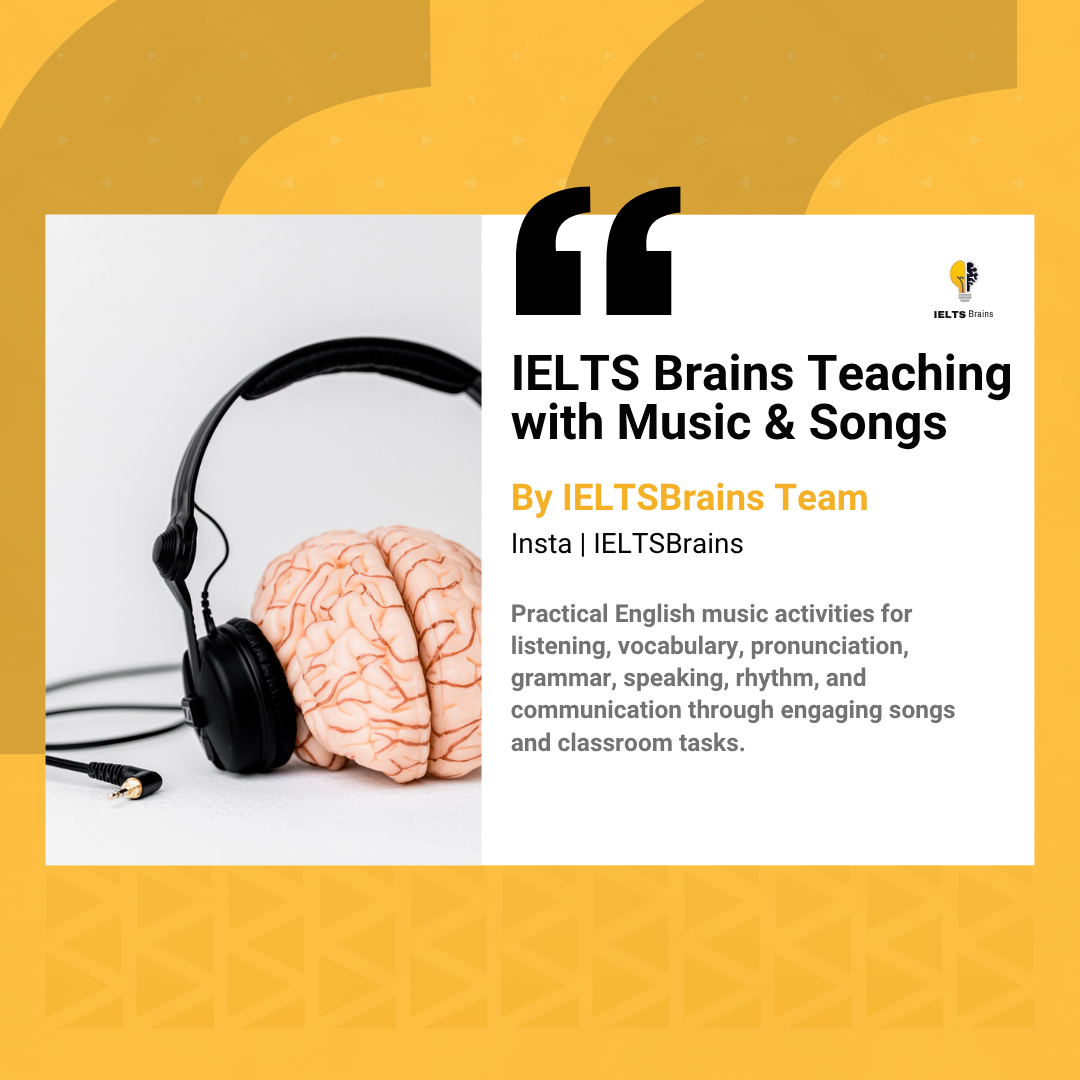
IELTS Brains Teaching with Music & Songs
Listen. Sing. Practise. Connect.
IELTS Brains Teaching with Music & Songs is a practical collection of English music activities designed to help teachers bring rhythm, authentic language, creativity, and interaction into English lessons.
Songs can provide meaningful exposure to vocabulary, pronunciation, connected speech, grammar, listening, rhythm, intonation, and natural expressions. With purposeful activities, music can become much more than entertainment—it can become an engaging language-learning tool.
Whether you teach General English, IELTS, Business English, Academic English, ESP, Kids, Young Learners, Teenagers, or adults, these music-based activities can be adapted to different learner levels, topics, lesson objectives, and classroom environments.
English Music Activities for the Classroom
These English music activities give teachers practical ways to use songs and musical content before, during, and after listening.
Teachers can use appropriate songs, selected sections, lyrics, rhythm activities, and music-based tasks to create engaging opportunities for learners to listen, notice language, communicate, and practise English.
What Can You Practise?
Use music-based activities to support:
- Listening comprehension
- Vocabulary development
- Pronunciation
- Connected speech
- Stress and rhythm
- Intonation
- Grammar in context
- Spelling
- Speaking fluency
- Memory and recall
- Communication
- Creative expression
Before Listening
Prepare learners for the song with topic discussions, prediction questions, key vocabulary, images, or short speaking activities.
Students can predict the topic, discuss the theme, identify useful vocabulary, and activate their existing knowledge.
While Listening
Keep students actively involved while listening.
Activities can include:
- Completing missing words
- Identifying key expressions
- Ordering lines
- Listening for specific information
- Identifying repeated language
- Noticing pronunciation
- Matching words and meanings
- Identifying grammatical patterns
After Listening
Turn music into meaningful language practice.
Students can:
- Discuss the message of the song
- Summarize the main idea
- Explain their opinions
- Learn and use new vocabulary
- Identify useful expressions
- Discuss the topic
- Rewrite selected lines
- Create new lyrics
- Perform or present
- Connect the song to personal experiences
Songs for English Learning
Songs can expose learners to natural rhythm, pronunciation, connected speech, vocabulary, expressions, and different ways of communicating ideas.
Teachers can use appropriate music to explore:
- Everyday English
- Natural expressions
- Pronunciation
- Word stress
- Sentence stress
- Intonation
- Vocabulary in context
- Grammar patterns
- Cultural topics
- Emotional expression
The aim is not simply to listen to music, but to turn listening into purposeful language practice.
Suitable for Different Learners
These English music activities can be adapted for:
- Beginner learners
- Elementary learners
- Intermediate learners
- Upper-intermediate learners
- Advanced learners
- Kids and Young Learners
- Teenagers
- Adult learners
- IELTS candidates
- Business English learners
- ESP learners
Suitable for Different Teaching Contexts
Use music-based resources in:
- Face-to-face classrooms
- One-to-one lessons
- Small-group classes
- Online lessons
- General English courses
- Speaking classes
- Listening lessons
- Vocabulary lessons
- Pronunciation lessons
- Conversation classes
- Young learner programs
- Review sessions
Why Teach English with Music?
Music can create memorable learning experiences and provide repeated exposure to language in a meaningful context.
Purposeful music activities can help teachers:
- Increase learner engagement
- Make listening practice more enjoyable
- Reinforce vocabulary
- Develop pronunciation awareness
- Practise rhythm and intonation
- Introduce natural expressions
- Encourage communication
- Create opportunities for creative language use
Build a Music-Based Lesson
Combine these English music activities with other IELTS Brains teaching resources, including:
- Lesson Plans
- Worksheets
- Flashcards
- Classroom Games
- Teaching with Stories
- Teaching with Movies & Video
- PowerPoint Slides
- Teaching Kits
- AI Teaching Tools
Explore the IELTS Brains Teaching Resources Hub for more practical resources designed for modern English teachers.
More Than a Song
A song can become the starting point for listening practice, vocabulary development, pronunciation work, discussion, creativity, and meaningful communication.
IELTS Brains Teaching with Music & Songs helps teachers transform music into structured, engaging, and purposeful English learning experiences.
Listen. Sing. Practise. Connect.
IELTSBrains | Real Strategies. Real Results.

Reviews
There are no reviews yet.