Description
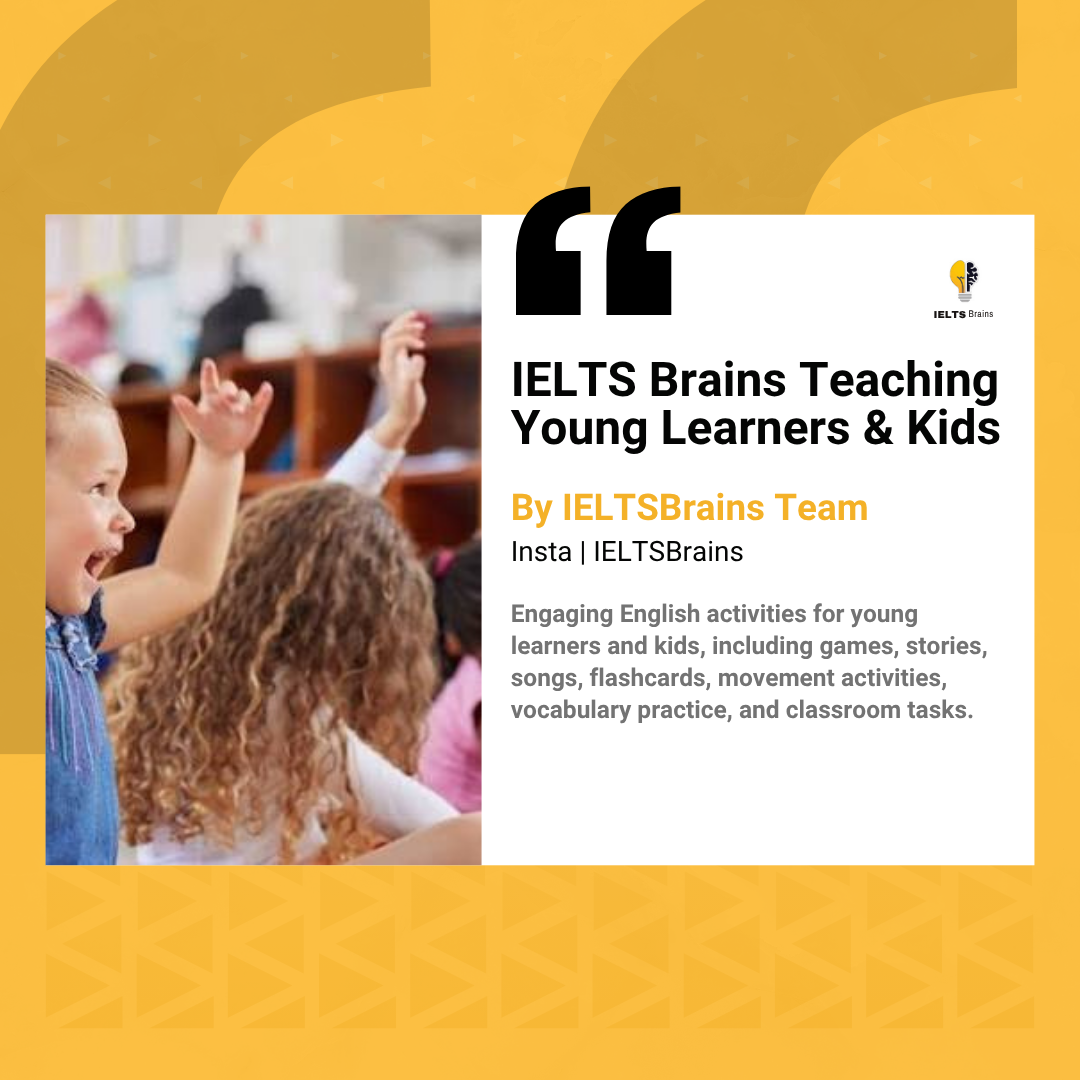
IELTS Brains Teaching Young Learners & Kids
Play. Explore. Learn. Grow.
IELTS Brains Teaching Young Learners & Kids is a practical collection of English activities for young learners designed to help teachers create engaging, age-appropriate, interactive, and meaningful English lessons for children.
Young learners benefit from movement, repetition, visual support, stories, songs, games, creativity, interaction, and opportunities to use language in context. These English activities for young learners help teachers turn these principles into practical classroom experiences that make English learning active and enjoyable.
English Activities for Young Learners
These English activities for young learners provide practical ideas and classroom-ready materials for developing English through play, interaction, movement, stories, songs, games, and creative activities.
Teachers can use individual activities or combine them with Lesson Plans, Worksheets, Flashcards, and Classroom Games to create complete and engaging lessons.
What Can Kids Learn Through English Activities?
These activities can support:
- Vocabulary development
- Basic grammar
- Listening comprehension
- Speaking
- Pronunciation
- Sentence formation
- Classroom language
- Everyday communication
- Memory and recall
- Social interaction
- Creativity
- Confidence
- Movement and coordination
- Early literacy
English Activities for Kids Through Play
Play gives children opportunities to hear, practise, repeat, and use English naturally.
Teachers can use:
- Matching games
- Memory games
- Guessing games
- Board games
- Flashcard games
- Movement activities
- Team challenges
- Find-and-point activities
- Role plays
- Interactive competitions
These English activities for kids can help learners practise language while remaining actively involved in the lesson.
English Activities for Young Learners with Stories
Stories can introduce vocabulary, characters, actions, emotions, and simple language patterns in meaningful contexts.
Teachers can use stories to help children:
- Predict what happens next
- Identify characters
- Repeat useful language
- Answer simple questions
- Retell events
- Act out scenes
- Create alternative endings
- Draw and describe ideas
Explore Teaching with Stories for additional story-based English teaching resources.
English Activities for Kids with Songs and Rhymes
Songs, rhymes, chants, and repetition can help young learners develop pronunciation, rhythm, vocabulary, memory, and confidence.
Teachers can use music-based activities for:
- Vocabulary practice
- Pronunciation
- Classroom routines
- Actions and movement
- Repetition
- Listening
- Speaking
- Review
Explore Teaching with Music & Songs for additional music-based classroom resources.
Flashcards and Visual English Activities
Visual resources can make new language easier for children to understand and remember.
Teachers can use flashcards and visual prompts for:
- Vocabulary presentation
- Matching
- Categorizing
- Speaking prompts
- Memory activities
- Quick review
- Classroom games
- Storytelling
Explore Flashcards for additional visual teaching resources.
Movement and Total Physical Response
Young learners often benefit from activities that allow them to move while learning.
Teachers can use actions, gestures, commands, classroom movement, and physical responses to reinforce language and maintain attention.
Activities can include:
- Action commands
- Simon Says
- Move and match
- Classroom hunts
- Mime and guess
- Action stories
- Vocabulary races
English Activities for Different Ages
These English activities for young learners can be adapted for:
- Preschool learners
- Kindergarten learners
- Primary school learners
- Young beginners
- Elementary young learners
- Mixed-ability classes
Teachers can adjust vocabulary, instructions, task complexity, timing, and interaction according to the age and level of their learners.
English Activities for Young Learners in Different Classrooms
Use these resources in:
- Face-to-face classrooms
- One-to-one lessons
- Small-group classes
- Online lessons
- English clubs
- Summer programs
- After-school programs
- General English courses
- Primary English programs
- Young learner workshops
Why Use English Activities for Young Learners?
Effective young learner teaching is not simply about making lessons entertaining. Activities should have clear language objectives and give children meaningful opportunities to hear, practise, and use English.
Well-designed English activities for young learners can help teachers:
- Increase participation
- Maintain attention
- Encourage communication
- Reinforce vocabulary
- Support pronunciation
- Build confidence
- Create positive learning experiences
- Provide repeated language practice
- Support different learning needs
Build a Complete Young Learner Lesson
Combine these English activities for young learners with other IELTS Brains teaching resources, including:
- Lesson Plans
- Worksheets
- Flashcards
- Classroom Games
- Teaching with Stories
- Teaching with Music & Songs
- PowerPoint Slides
- Teaching Kits
- AI Teaching Tools
Explore the Teaching Resources Hub to discover more classroom-ready English teaching resources for modern teachers.
Teachers can also explore professional resources for teaching English to children through the British Council’s TeachingEnglish platform.
More Than Fun
Teaching children effectively requires more than games and entertainment. Every activity should have a clear purpose, an appropriate level of challenge, and a connection to language learning.
IELTS Brains Teaching Young Learners & Kids helps teachers create active, creative, structured, and purposeful English lessons where children can play, communicate, practise, and grow.
Play. Explore. Learn. Grow.
IELTSBrains | Real Strategies. Real Results.
Reviews
There are no reviews yet.